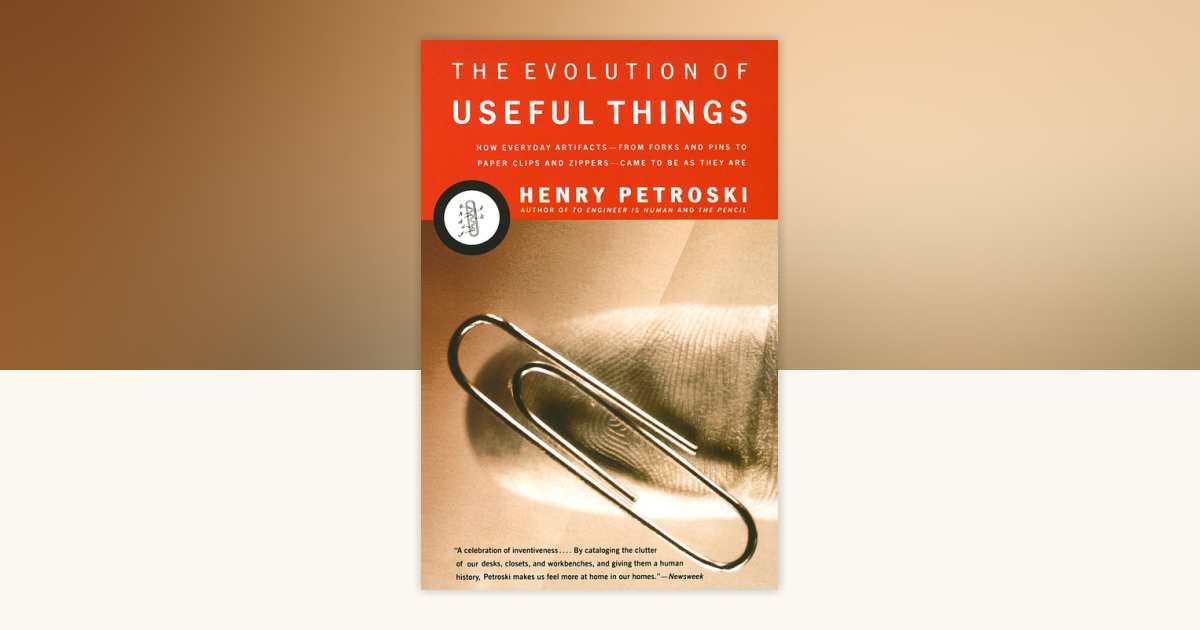
The Evolution of Useful Things
A big book about small stuff

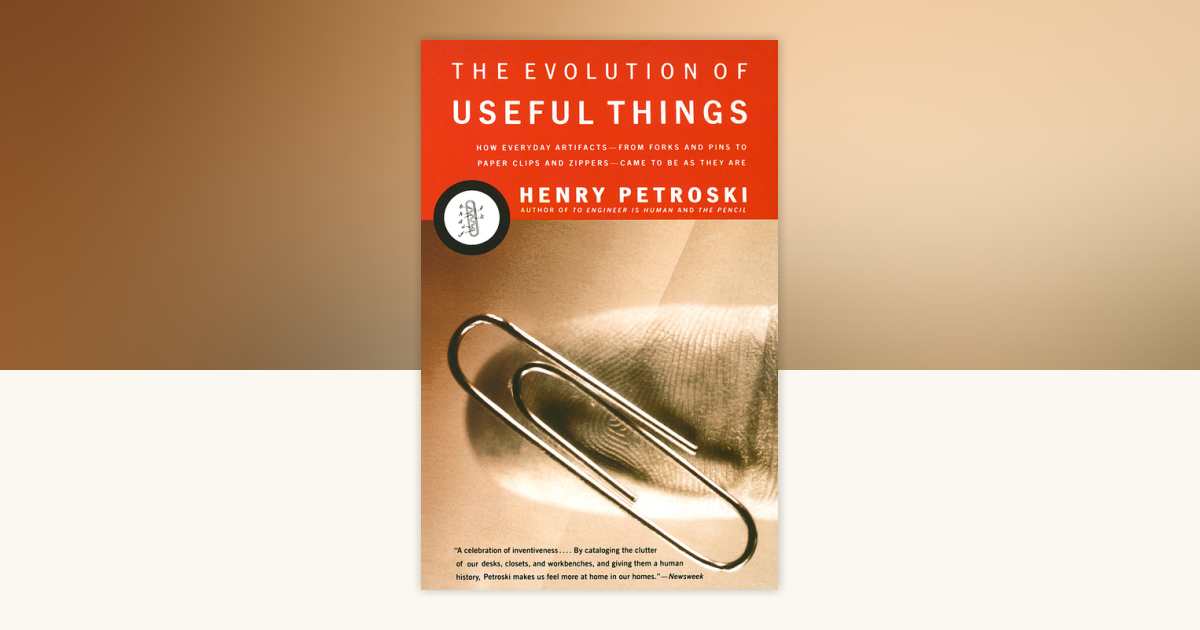
What drives innovation? What spurs the invention of new technology? One might be inclined to look to the most famous inventions for answers, like the light bulb, the airplane, or the computer. But not Henry Petroski. No, he examines these lofty questions by investigating the humblest of tech, like forks, paperclips, tin cans, and fast food containers. In doing so, he argues that the true force behind innovation isn't necessity, as the old adage goes, but irritation.
It makes perfect sense, and might even be a little unsurprising, but it's refreshing, nonetheless, to read a theory of innovation grounded in the everyday experience of real human beings just trying to get through their day. It's especially refreshing after reading Kevin Kelly's What Technology Wants, which argues that technology is a kind of living organism that drives its own innovation. I'll take Petroski's pragmatism over Kelly's sci-fi idealism any day.
More than once, while reading this book, I found myself thinking, "I can't believe I'm reading about something this banal and enjoying it!" Petroski is an expert at finding the marvelous in the mundane. His philosophy of invention is rooted in the prosaic, yet is anything but. By examining the small, he exposes the impetus for the large: all technology is a response to failure. We don't invent out of pure curiosity. We need a little frustration, first.
After reading this book, I can't help but wonder if Petroski's bottom-up approach would be fruitful for understanding other things. Perhaps the answer to the meaning of life has more to do with the itch behind my ear than it does with happiness, success, or love.
 Dismiss